Trainer Form in Greyhound Racing: Why It Matters
Best Greyhound Betting Sites – Bet on Greyhounds in 2026
Loading...
The Trainer Column: The Most Overlooked Edge
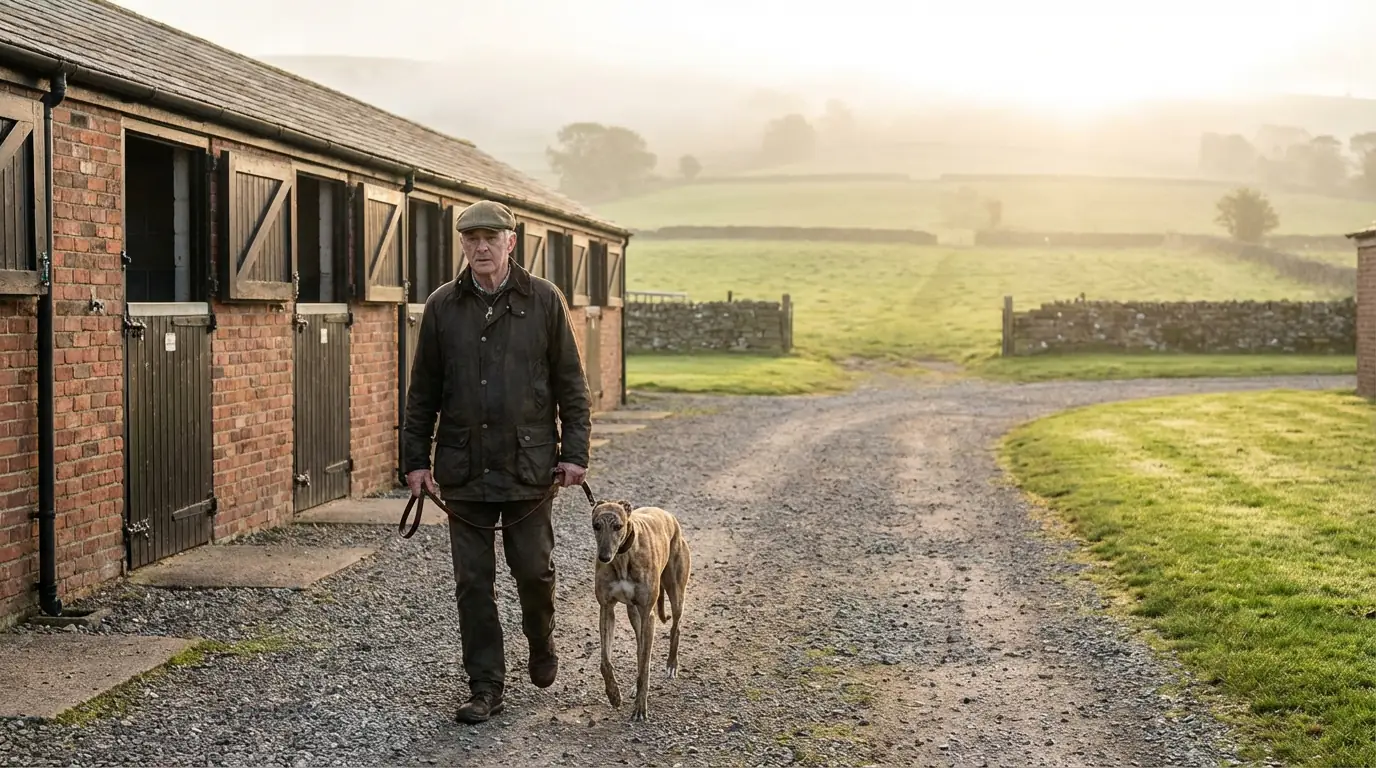
Most punters check the dog’s form and ignore the trainer’s — that is a mistake with measurable consequences for your bottom line. The trainer is the single most influential human variable in a greyhound’s performance. They control the dog’s diet, training regime, race scheduling, and conditioning. Two dogs of identical raw ability can produce vastly different results depending on who prepares them, and yet the trainer column on the racecard receives a fraction of the attention that form figures, trap draw, and times command.
In horse racing, trainer statistics are mainstream. Punters routinely check which trainers are in form, which perform well at specific courses, and which have a high strike rate with certain race types. The same analytical framework applies to greyhound racing, but far fewer punters use it. The data exists — trainer records are compiled by the Greyhound Board of Great Britain and by independent data providers — but the vast majority of casual bettors never consult it.
That gap between available information and market usage is where the edge lives. When trainer form is strong and the market has not fully priced it in, you have an informational advantage. When trainer form is poor and the market is propping up a dog’s price based on its individual form alone, you have a reason to be cautious. Trainer analysis does not replace dog-specific form reading — it supplements it, and the combination is significantly more powerful than either in isolation.
What to Look for in Trainer Records
Strike rate at specific tracks. Win rate with first-time entries. Patterns in when they run their best dogs. These are the trainer metrics that separate useful data from background noise.
Overall strike rate is the starting point but not the endpoint. A trainer with a 20% win rate across all runners sounds impressive, but if that record is built on a small sample of carefully placed dogs in weak races, it tells you less than it appears. Look at the sample size — a 20% strike rate over 200 runners in a year is meaningful. The same rate over 30 runners is statistically unreliable.
Track-specific performance is often more informative than overall statistics. Greyhound trainers tend to have home tracks where they run the majority of their dogs, and their familiarity with those tracks — the surface, the trap characteristics, the grading system, the competition — gives them an edge that does not travel equally to every venue. A trainer with a 25% strike rate at Romford and a 10% rate at Sunderland is clearly better suited to one track than the other. When that trainer has a runner at Romford, you should pay more attention than when they send a dog to Sunderland.
First-time-at-track runners are a specific angle worth tracking. When a trainer brings a dog to a new track for the first time, the result is often revealing. Some trainers consistently place dogs at new venues where they have assessed the competition is weaker or the conditions are favourable. A high win rate with first-time entries at a particular track suggests deliberate placement — the trainer is choosing that track because they believe their dog has an advantage, not simply filling a slot on the card.
Seasonal patterns are another dimension. Some kennels peak at certain times of year — perhaps their training facilities are better suited to warmer months, or their star dogs are being prepared for specific summer competitions. Tracking a trainer’s monthly win rate over two or three years can reveal these cyclical patterns. A kennel that consistently outperforms in May through August and underperforms in the winter months is giving you a calendar-based signal worth noting.
Post-break performance is particularly telling. How do a trainer’s dogs perform when returning from a rest? Some trainers bring dogs back sharp — their first run after a break is competitive. Others use the first run as a fitness exercise, with the expectation that the dog will improve on its second or third outing. If you can identify a trainer’s post-break pattern, you can adjust your assessment of their runners accordingly. Backing a trainer’s dogs first-time-out when their record shows those runs are typically prep efforts is a reliable way to lose money.
Identifying Hot Kennels
A kennel on a winning streak is not luck — it is a training programme peaking. Identifying these purple patches in real time, rather than retrospectively, is one of the most valuable skills a greyhound punter can develop.
Hot kennels are a genuine phenomenon in greyhound racing. Training is not a constant — it involves periodisation, where dogs are brought to peak fitness at targeted times. A trainer preparing a team of dogs for a busy summer schedule may have multiple runners hitting form simultaneously, producing a cluster of winners over a short period. This clustering is not random. It reflects the trainer’s preparation cycle, and it tends to persist for weeks rather than days.
The signal to watch for is an increase in both frequency and quality of winners. A trainer who typically produces one winner a week suddenly landing three or four in a week — from different dogs, at different distances, in different grades — is in a hot spell. The breadth of the winning streak matters. If the same single dog is winning repeatedly, that is a good dog in form, not necessarily a hot kennel. If multiple dogs from the same kennel are outperforming their recent form, the trainer’s conditioning programme is working.
The duration of hot streaks varies, but in greyhound racing they typically last three to six weeks before regression to the mean sets in. Dogs tire, the peak fitness window passes, and the kennel returns to a more normal strike rate. Catching the streak early — after two or three above-average winners but before the market adjusts — is where the value lies. By the time a kennel’s hot run is common knowledge among regular track attendees, the prices on their runners will have shortened to reflect the trend.
Tracking this is straightforward if you follow specific tracks regularly. Note the trainer of every winner at your main track over a rolling four-week period. When a trainer’s name appears disproportionately often — say, twice a week when their average is twice a month — investigate further. If the winners are from different dogs in different types of races, you are likely looking at a kennel in peak form.
Incorporating Trainer Form Into Selections
Trainer form is a tiebreaker when two dogs look evenly matched on paper — but it can also be a primary filter if you build the right data set.
At the simplest level, trainer form enters your process as a final check. You have analysed the form, assessed the draw, and narrowed the race to two or three candidates. The trainer column is your last question: which of these dogs is trained by someone in form? Which is trained by someone whose kennel is underperforming? If one of your shortlisted dogs has a trainer on a hot streak and the other’s trainer has a 5% strike rate over the past month, that information tilts the balance.
At a more advanced level, you can use trainer data as an initial filter. Before studying the racecard in detail, check the trainer records for the meeting. Are there any runners from kennels currently in a purple patch? Are there any from trainers whose record at this specific track is notably strong? Those runners get priority in your analysis. Dogs from struggling kennels can be reviewed more quickly and dismissed if they do not stand out on other grounds.
One area where trainer form is particularly relevant is in spotting intended improvement. Trainers make deliberate decisions about when and where to run their dogs. A dog that has been running at a less competitive track and is now entered at a higher-profile venue may signal that the trainer believes it is ready to step up. A dog dropped in grade and switched to a shorter distance may be being placed to win after a string of near-misses at a longer trip. These placement decisions are the trainer’s way of optimising each dog’s chances, and noticing them gives you insight that the raw form figures do not provide.
Be wary, however, of over-relying on trainer data at the expense of dog-specific form. A trainer can be in brilliant form, but if their runner in tonight’s race has poor recent times, an unfavourable draw, and is stepping up in class, the trainer’s hot streak does not override those negatives. Trainer form is a modifier — it adjusts your confidence up or down — not a replacement for the fundamental analysis of the dog’s individual credentials.
The Hand Behind the Dog
The best trainers do not just condition dogs — they place them in the right races. That distinction is what elevates trainer analysis from a simple win-rate check to a genuine source of betting insight.
A skilled greyhound trainer reads the grading structure the way a chess player reads the board. They know which races suit which dogs, which tracks favour their runners’ styles, and when a dog is sharp enough to win versus when it needs another run. The placement decision — entering a dog in this specific race, at this specific track, at this specific grade and distance — is an expression of the trainer’s opinion about the dog’s current ability and the quality of the opposition. When a trainer with a strong track record places a dog in what looks like a winnable race, that placement carries more weight than the dog’s raw form alone might suggest.
Over time, you will develop a feel for the trainers at your regular tracks. You will know which ones are conservative — only running dogs when they are confident of a good result — and which are aggressive, racing dogs frequently regardless of their readiness. You will know which trainers prepare dogs well for specific distances and which trainers’ dogs tend to need two or three runs before hitting form. That knowledge becomes a permanent part of your analytical toolkit, applicable to every racecard you study.
The trainer is the invisible hand behind every greyhound on the card. Making that hand visible — through data, observation, and pattern recognition — is one of the quietest but most reliable ways to improve your selection process.