Expert Form and Greyhound Winner UK
Trap draw, form reading, grading, odds and bet types — everything a UK punter needs to make sharper selections at the dogs.
Best Greyhound Betting Sites – Bet on Greyhounds in 2026
 Available in US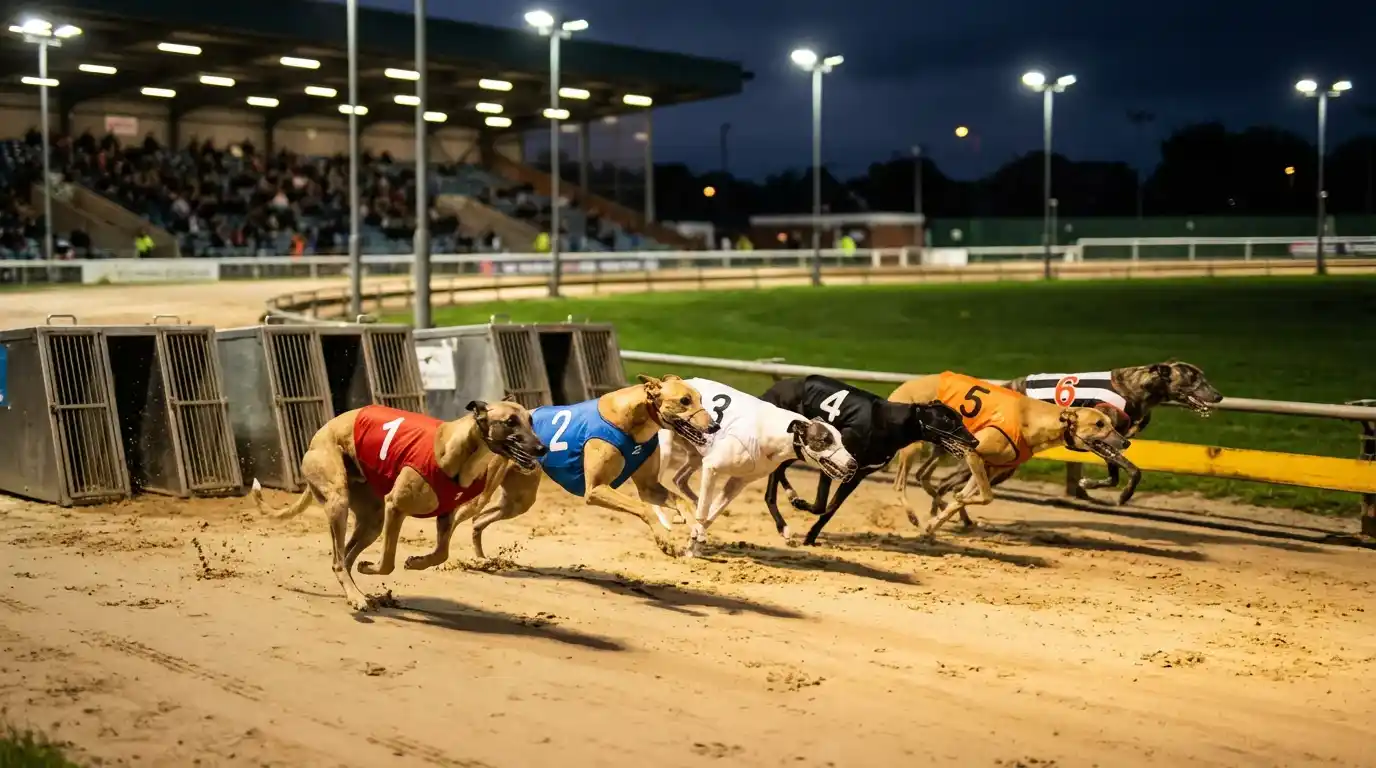
Key Differences Between Greyhound Betting and Other Racing Sports
Six dogs, no jockey, no weight cloth — greyhound racing strips race betting down to raw data and instinct. There is no rider to judge, no tactical riding style to decode, no stable jockey booking to read between the lines of. When the traps open, every dog runs its own race, and the outcome comes down to a handful of measurable factors that a disciplined punter can learn to read with genuine accuracy.
That simplicity is exactly what makes greyhound betting a different discipline from horse racing. In a typical horse race you might study twelve or more runners, weigh up draw bias, going preference, jockey form, and pace angles across a mile and a half. In greyhound racing, six runners cover a distance that rarely lasts longer than thirty seconds. The variables are fewer, the data is tighter, and opportunities stack up fast with races every fifteen minutes at a busy meeting. But fewer variables does not mean easier. The trap draw matters. The running style matters. The grade the dog competed in last week matters. And the form figures on the race card tell a story that, once you can read it, reveals more about a dog's chance than the price on the screen ever will.
Greyhound Racing Betting — Wagering on the outcome of licensed greyhound races, where six dogs chase a mechanical lure around an oval track over set distances. Bets range from simple win singles to complex forecast and tricast combinations, all underpinned by form analysis, trap draw, and an understanding of how grades and running styles interact.
This guide is built for UK punters who want to move beyond instinct and start making selections that hold up under scrutiny. Whether you are new to the dogs or have been going to the track for years without keeping a proper record, the framework here covers every element that feeds into picking a greyhound winner — from reading form and understanding trap dynamics to choosing the right bet type and managing a bankroll that survives the inevitable losing runs. The goal is not to hand you a system. It is to give you the tools to build one that works for you.
Reading Greyhound Form: The Foundation of Every Winner Pick
Before you look at odds, you look at form — everything else is decoration. The race card is the single most information-dense document in greyhound betting, and learning to read it properly is the dividing line between punters who guess and punters who assess. Every column on that card exists to tell you something about what a dog has done, under what conditions, and how that performance compares to the rest of the field lining up today.
Form — A dog's recent racing record, typically shown as a sequence of finishing positions across its last six runs, read from left to right (most recent on the right). A form line of 3 2 1 1 4 1 tells you the dog won its most recent race, finished fourth before that, won twice, then placed second and third in the two oldest runs shown.
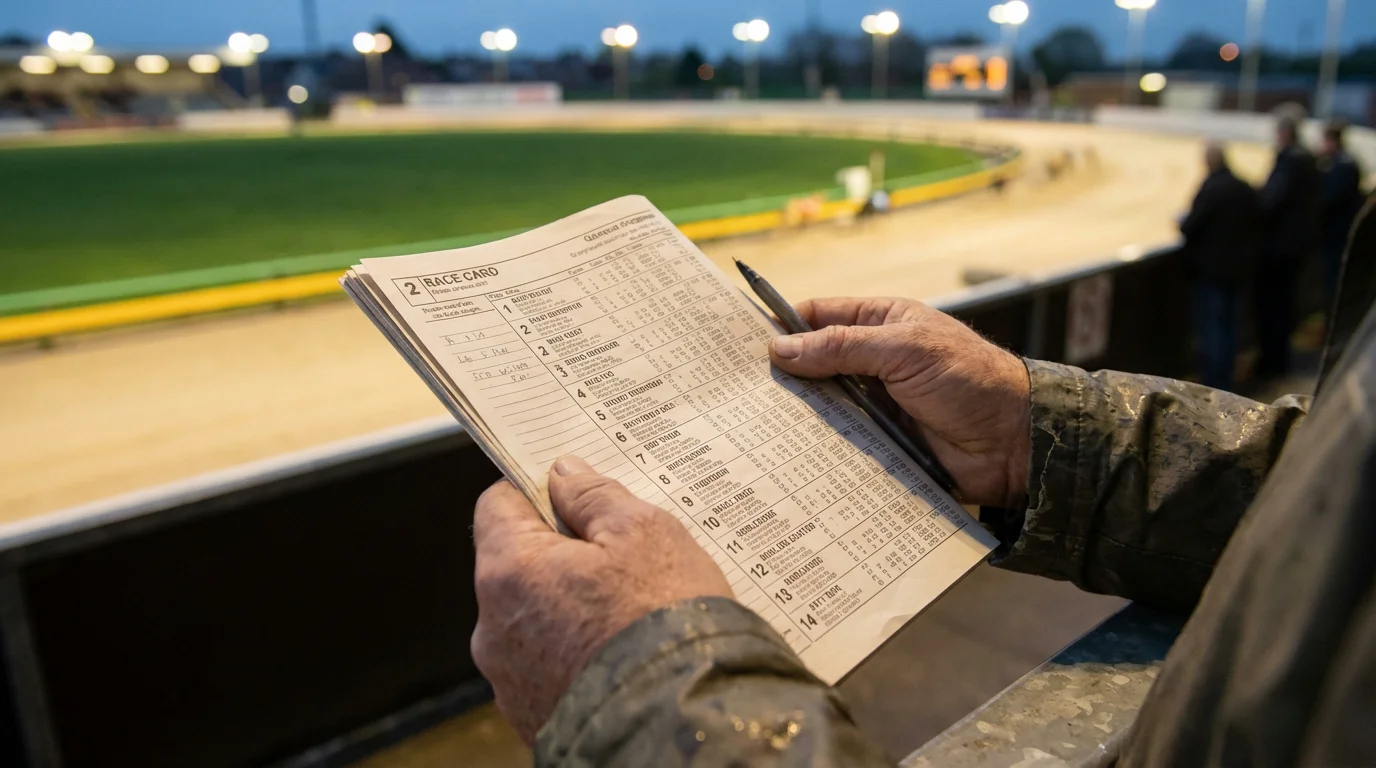
Form is the foundation because it is the only evidence you have of what a dog can actually do on the track. Odds are opinions. Tips are someone else's opinions. The form card is recorded fact — finishing positions, times, trap draw, weight, grade, and in-running comments, all logged by the racing office for exactly this purpose. But raw form figures in isolation can mislead you. A dog that finished first in its last three runs looks impressive until you notice it dropped two grades between those races. A dog showing a string of fourths and fifths might be about to drop into a grade where it becomes the class act of the field. Context is everything, and the race card gives you all the context you need — if you know where to look.
How to Read a Greyhound Race Card
A standard UK race card row contains: the trap number and colour (Trap 1 red through Trap 6 striped), the dog's name, the form line showing the last six finishing positions, the finishing time for each run, the distance beaten or winning margin, the grade, the weight recorded on race day, and the in-running comment. These comments are shorthand — BMP1 means bumped at the first bend, MSBK is missed break, RLRU means railed and ran up, SAw means slow away — and they carry significant information about what happened during the race rather than just the result.
The trainer's name is listed alongside each dog, and while casual punters ignore it, trainer form is a legitimate factor. Some kennels run hot for weeks when their dogs are fit and well-trialled. Tracking which trainers have strong records at a particular venue is a layer of analysis most people skip. Weight is recorded in kilograms and fluctuates between runs. Small changes of half a kilogram are normal. A change of a kilogram or more warrants attention — it could signal peak fitness or the opposite.
Sectional Times and What They Reveal
Overall finishing time tells you how fast a dog covered the full distance, but it does not tell you where that speed came from. Sectional times — split-time data measured at the first bend and the third bend, or at specific distances — reveal whether a dog is an early-pace type that blazes to the front or a closer that starts slowly and finishes fast. Two dogs might both run 29.50 over 480 metres, but if one ran a 3.80 first split while the other ran 4.10, their race profiles are completely different. The GBGB publishes sectional data for licensed meetings, making this level of analysis accessible to any punter willing to use it.
Calculating True Speed From Sectional Splits
Dog A runs 480m in 29.40 seconds. First split to the bend: 3.85 seconds over approximately 85 metres. Calculated speed to the first bend: 85 / 3.85 = 22.08 metres per second.
Dog B runs the same distance in 29.45 seconds. First split: 4.15 seconds. Calculated speed to the first bend: 85 / 4.15 = 20.48 metres per second.
Dog A reaches the first bend roughly 1.6 metres per second faster — a significant gap in a sport where the first bend often determines the result. Dog B, however, must have covered the remaining 395 metres in 25.30 seconds versus Dog A's 25.55, meaning Dog B is the stronger finisher. The question for the punter becomes: which dog gets the lead into the first bend given their trap draws, and can Dog B close the gap on the run-in?
The sectional split is particularly useful when assessing dogs switching to a different distance. A dog with strong closing splits over 480 metres might be a candidate for a step up to 640 metres, where its stamina becomes an asset rather than a recovery mechanism. Conversely, a dog with blazing early speed but fading late sections might be better suited to a sprint distance where the finish line arrives before the fade sets in.
Trap Draw and First-Bend Dynamics
Trap 1 gets the rail. Trap 6 gets room. Neither advantage is as simple as it sounds. The trap draw is one of the most discussed — and most misunderstood — factors in greyhound racing. Every punter has a theory about which box is best, and most of those theories collapse the moment you look at the data across a large enough sample.
In a six-dog race, a perfectly even distribution would give each trap a 16.7% share of wins. In practice, the inside traps — particularly Trap 1 and Trap 2 — win slightly more often than that, while the outside traps, especially Trap 5 and Trap 6, tend to win slightly less. The reason is geometrical: the first bend on an oval track is closer to the inside rail, and the dog in Trap 1 has the shortest distance to travel to reach it. Every other dog has to cover more ground, and the wider you start, the more ground you give away.
Across UK licensed tracks, Trap 1 typically wins around 19-20% of races — roughly three percentage points above the statistical average. That margin sounds small, but over thousands of races it represents a genuine and persistent bias that the market does not always fully price in.
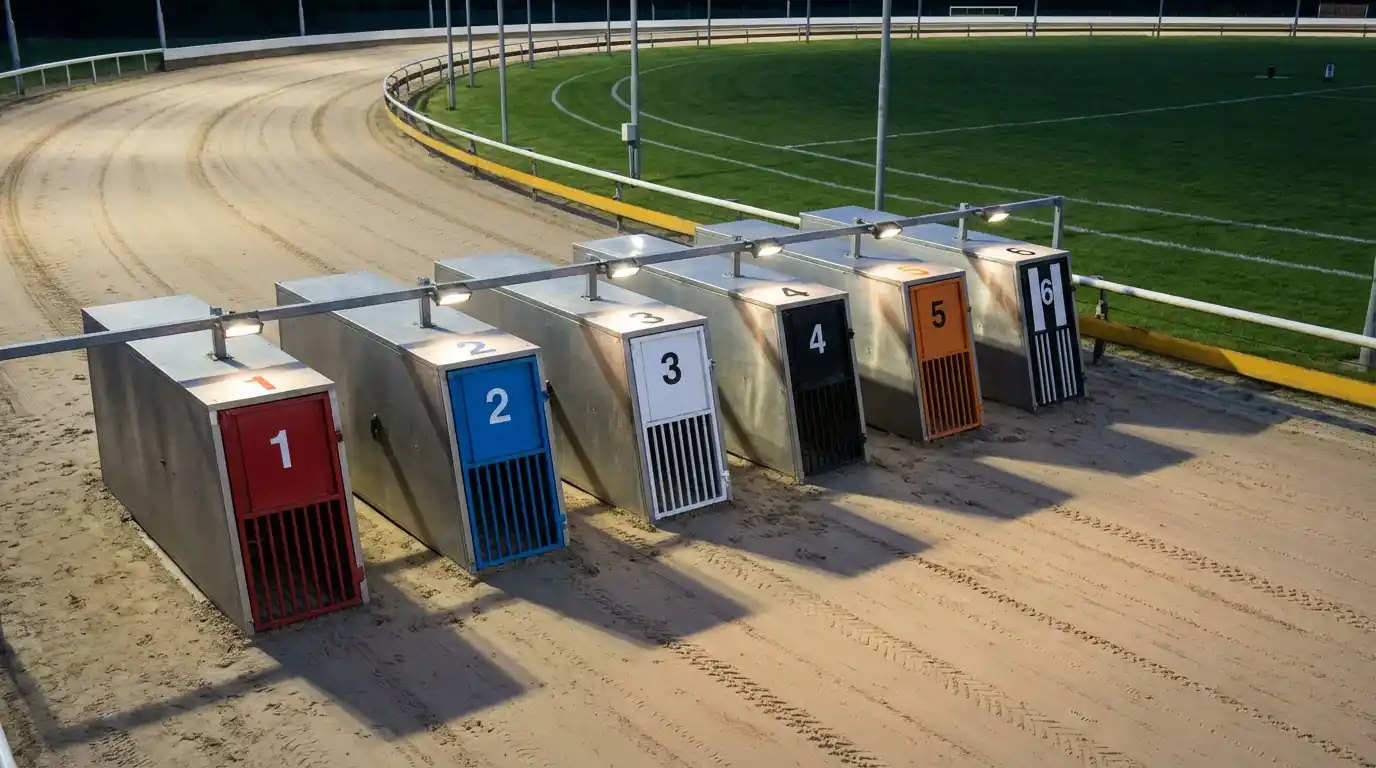
But trap advantage is not a universal law. It is track-specific and distance-specific. At a track with a long run to the first bend, the inside advantage is diluted because all six dogs have time to find their position before the bend arrives. At a track with a short run-up, the inside traps dominate because there is no time for wide runners to negotiate their way across. The configuration of the first bend itself matters too — a tight bend favours railers, while a sweeping bend gives wider-running dogs a fairer chance.
The interaction between trap draw and running style is where the real analysis begins. A railer — a dog that naturally gravitates towards the inside rail — ideally wants Trap 1 or Trap 2. From there, it can take the shortest route with minimal interference. Put that same railer in Trap 6 and it has to cross the entire field to reach the rail, which means trouble at the first bend and a race spent chasing rather than leading. A wide runner, on the other hand, can tolerate an outside draw because it will naturally move away from the pack and race in clear air. The dogs that cause the most headaches for punters are the middle runners — those with no strong preference — because their draw is less predictable in its effect.
Experienced punters check the trap draw not as a standalone factor but in combination with the rest of the field. If Trap 1 has a confirmed railer and Trap 2 has a dog that tends to break slowly, the railer has a clear run. If Traps 1 and 2 both have early-pace dogs with rail-seeking tendencies, interference at the first bend is likely, which might benefit a strong closer in Trap 5 or Trap 6 who avoids the trouble. Reading the draw as a dynamic — who crosses whom, who gets clear air — separates serious punters from those who just back Trap 1 every time.
Running Styles: Early Speed, Closers, and Everything Between
The dog that leads at the first bend wins more often than any stat model predicts. This is the single most important sentence in greyhound racing for bettors, because it cuts through the noise and gets to the mechanical reality of the sport. Greyhound races are run on oval tracks with bends that funnel six dogs into a narrow corridor. The dog in front at the first bend gets the clean run. The dogs behind get the traffic, the bumping, and the lost ground that no amount of closing speed can always recover.
Dogs are loosely classified into three running-style categories. Early-pace dogs — sometimes called front-runners or leaders — break sharply from the traps and aim to hit the front before the first bend. Mid-pack runners settle into a position behind the leaders and look to improve through the race, relying on a combination of stamina and race craft. Closers are dogs that start slowly, either by nature or because of their trap draw, and produce their best speed in the second half of the race, running on past tiring leaders in the final stretch.
Statistically, early-pace dogs win more races than their share of the field would suggest. The reason is not just that they are faster to the first bend — it is that the first bend creates a bottleneck. When six dogs converge on the same piece of track, the one in front is the only one guaranteed clear running. Every other dog is at risk of checking, bumping, or being forced wide, all of which cost lengths that are difficult to claw back over a race distance that lasts less than thirty seconds.
This does not mean closers cannot win. They do — particularly over longer distances where the race unfolds over more bends and there is time for leaders to tire. Over 640 metres or further, the early-pace advantage is significantly reduced. Over sprint distances of 250 or 270 metres, the early-pace dog is almost unchallengeable if it breaks cleanly.
For bettors, running style is a filter that sits on top of form and trap draw. A dog with strong early pace drawn in Trap 1 against a field of closers is a strong candidate to lead from start to finish. The same dog drawn in Trap 6 against two other early-pace types in Traps 1 and 2 faces a completely different prospect. The style of the race — who leads, who tracks, who closes — is something you can often predict before the traps open, and that prediction is where the real edge in greyhound selection lies.
Early pace dominates greyhound racing statistically. The dog that leads at the first bend wins the majority of races, because the first bend creates interference that penalises dogs running in the pack. Identifying which dog in a race has the pace and the draw to lead is the single most valuable selection tool available to punters.
How Greyhound Grading Works — and Why It Matters for Bettors
Grades exist to keep races competitive — but grade changes are where the betting edge hides. The UK grading system is administered by individual tracks under GBGB regulations, and its purpose is to group dogs of similar ability so that races are closely contested. Think of it as a handicapping mechanism, except instead of carrying extra weight or starting from a wider trap, dogs are simply moved into faster or slower company based on their recent results.
Every licensed track in the UK runs graded races from the top tier down to the lower levels. A dog that wins consistently at one grade will be promoted to the next — a harder race, against faster opponents. A dog that fails to compete at its current level will eventually be dropped to a lower grade, where the opposition is weaker. This constant circulation of dogs through the grading ladder is the single most important context variable for bettors, and it is also the most overlooked.
A1 — A3: Top Graded Races
The fastest dogs at a track. A1 fields feature dogs with the best recent times, and competition is fierce. Win margins are tight. These races often go close to the market, and favourites have a reasonable strike rate because the field quality is compressed.
B1 — B4: Solid Middle Tier
Where most regular racing takes place. B-grade races have a wider spread of ability, and this is where grade movement — dogs dropping from A or climbing from C — creates the sharpest value opportunities for alert punters.
C1 — D4: Lower Grades
Dogs at this level are either developing youngsters who have not yet shown top-grade ability or older dogs whose times have slowed. Fields can be less predictable, and the form is patchier, but a dog dropping from a higher grade into this company can be a standout on the card.
Open Races
No grade restriction. These are the feature events at any meeting, attracting the best dogs the track has available. Favourite win rates in open races tend to be higher than in graded events because the class differential between the best and worst dog in the field is usually smaller.
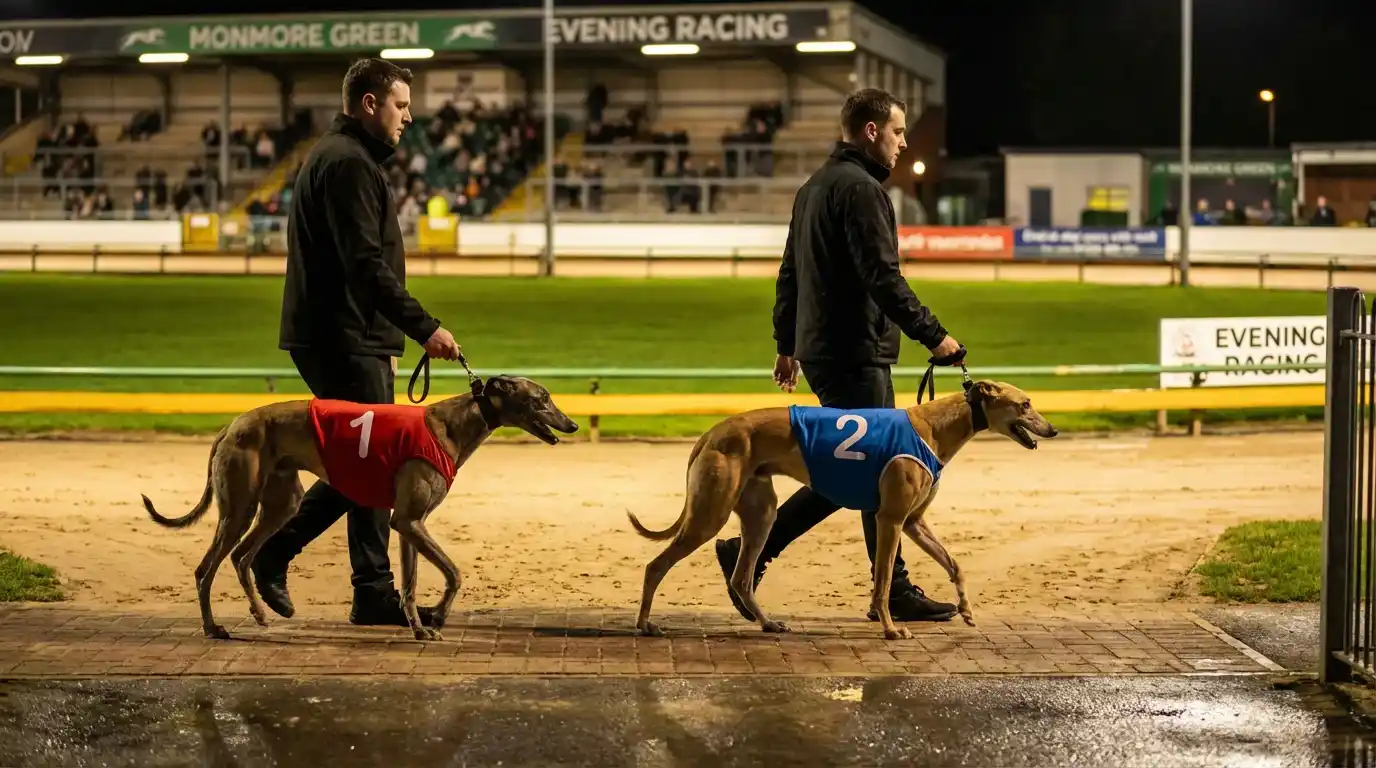
The mechanism that matters most to punters is grade movement. When a dog drops in grade — say from A3 to B1 — it is moving into weaker company. Its recent times may look poor relative to A3 competitors, but against B1 opposition those times could be the fastest in the race. The market sometimes adjusts for this, but not always quickly or fully. A freshly dropped dog is one of the most reliable angles in greyhound betting. The reverse is equally important: a dog promoted after a couple of wins at B2 into A4 will face faster opponents, and the form that earned the promotion may not be good enough. Backing recently promoted dogs at short prices is a quiet way to bleed a bankroll.
The GBGB oversees the regulatory framework for grading in 2026, and individual tracks apply the system with some local variation. At some venues the grade bands are wide, meaning the gap between the top and bottom of a grade is significant. At others the bands are tighter and the grade transitions less dramatic. Knowing how your track handles grading — and watching the grade-change announcements each week — is one of the simplest edges a punter can develop.
Bet Types for Greyhound Racing: Choosing the Right Wager
Win singles are the bread. Forecasts are where the jam is. The range of bet types available on greyhound racing is wider than most casual punters realise, and choosing the right wager for the right race is a skill in itself — one that can turn an accurate read of the form into a profitable night or waste it entirely.
The simplest bet in greyhound racing is the win single: pick a dog, back it to win, collect if it finishes first. No complexity, no hedging, no structural disadvantage beyond the bookmaker's margin. For punters developing their skills, the win single is the most honest test of selection ability — if your win singles show a positive return over a meaningful sample, everything else becomes more powerful. Place betting — backing a dog to finish in the first two — carries lower odds but a higher strike rate. In a six-runner field, two places means a third of the field qualifies, making place bets most useful when you are confident a dog will be competitive but uncertain it will win.
When Each Way Makes Sense — and When It Doesn't
An each-way bet is two bets in one: a win bet and a place bet at one-quarter the win odds for the place portion, with two places paid. If your dog wins, both parts pay. If it finishes second, only the place part pays. The total stake is double a single — five pounds each way costs ten.
At odds of 4/1, the place portion pays at 1/1, meaning you get your place stake back plus the same again. Your win bet loses, so the net result is roughly break-even. Below 4/1, each way erodes your profit because the place return does not compensate for the doubled stake. Above 4/1, it starts to offer genuine insurance. The practical rule: each way makes sense on dogs priced at 5/1 or above when you rate them a strong place chance. On shorter-priced selections, a straight win single is the cleaner bet.
Forecasts and Tricasts: Higher Risk, Higher Reward
Forecast bets ask you to predict the first two dogs home in three forms. A straight forecast (SFC) names first and second in exact order — one bet. A reverse forecast (RFC) covers both orders — two bets. A combination forecast (CFC) lets you select three or more dogs and covers every first-and-second pairing: three dogs means six bets, four dogs means twelve.
Greyhound racing suits forecast betting because six-runner fields produce only 30 possible straight forecast outcomes, versus 132 in a 12-runner horse race. A punter with a good read of the race — who leads, who closes, who has the draw to sit second — can narrow the realistic combinations to two or three with a reasonable chance of being right.
Forecast Bet Example
You back a straight forecast: Dog A first, Dog C second.
Stake: 5.00
The computer forecast dividend returns 18.40 to a 1.00 unit.
Your return: 5.00 x 18.40 = 92.00
Profit: 87.00
Tricast bets extend the principle to the first three home, in exact order (straight tricast) or any order (combination tricast). A combination tricast on three dogs costs six bets; adding a fourth pushes it to twenty-four. Three-figure dividends from a one-pound unit are not unusual, but the hit rate is low and tricasts should be treated as occasional high-conviction plays. Other greyhound markets include trap challenge bets, match bets between individual dogs, and Tote pool bets. These add variety but for serious punters the core armoury remains the win single, each-way bet, and forecast.
Understanding Odds and Finding Value
An odds-on favourite that wins pays less than it costs you in the long run if you back every one. That sentence is the entire foundation of value betting in a single line. Odds reflect probability — or more accurately, they reflect the bookmaker's assessment of probability, adjusted upward by a margin that ensures the bookmaker profits regardless of the outcome. Your job as a punter is not simply to pick winners. It is to find dogs whose true winning chance is higher than the price implies.
Greyhound odds in the UK are set through a combination of tissue prices — the bookmaker's initial assessment based on form, grade, and draw — and market forces once the betting opens. Early prices are available in the morning for evening meetings, and these can shift significantly as money comes in. The starting price (SP) is the final price at the moment the traps open. The gap between the early price and the SP is where alert punters often find their edge: if you assess a dog as a strong chance and the early price is generous, taking the price early locks in value before the market corrects.
Best Odds Guaranteed (BOG) is offered by most major UK bookmakers on greyhound racing. If you take an early price and the SP is higher, the bookmaker pays at the SP instead — giving you the security of an early price with the upside of any market drift. Not every bookmaker extends BOG to greyhounds, so checking before you bet is worthwhile.
Favourite win rates in greyhound racing sit at roughly 30-35% across all UK tracks and grades. That figure is important because it tells you two things. First, favourites win often enough that blindly opposing them is a losing strategy. Second, they lose around two-thirds of the time, which means backing every favourite at the prices offered is also a losing strategy because the odds are too short to compensate for the losses. The punter who profits is the one who can distinguish between favourites that deserve their price and favourites that are over-bet — and between outsiders that are genuinely outclassed and outsiders whose form in a new grade or at a new distance makes them a better prospect than the market suggests.
Overround is the bookmaker's built-in margin. In a six-runner greyhound race, a fair book would add up to 100%. In practice, the market typically sums to 115-125%, meaning the bookmaker has a 15-25% edge before a bet is placed. Punters cannot eliminate the overround, but they can reduce its impact by consistently taking the best available price across multiple bookmakers. Over hundreds of bets, the difference between average odds and best odds compounds into a meaningful ROI improvement.
Do
- Compare early prices with the SP — if your early price was better, BOG gives you the upside anyway
- Track your strike rate at different odds bands to learn where your selections perform best
- Use odds comparison tools to ensure you are always taking the highest available price
Don't
- Back every favourite at face value — favourites lose two out of three races on average
- Assume a short price means a safe bet — the market is not always right
- Ignore the overround — betting with a bookmaker whose margins are consistently higher costs you money over time
From reading the odds to building the system
Building a Greyhound Betting Strategy That Lasts
Strategy isn't a system you buy — it's a framework you build and test. The greyhound betting world is littered with promises of guaranteed-profit systems, most of which work brilliantly in hindsight and collapse the moment real money is at stake. A genuine strategy is less glamorous and far more effective: it is a repeatable process for selecting dogs, sizing bets, recording results, and adjusting based on evidence.
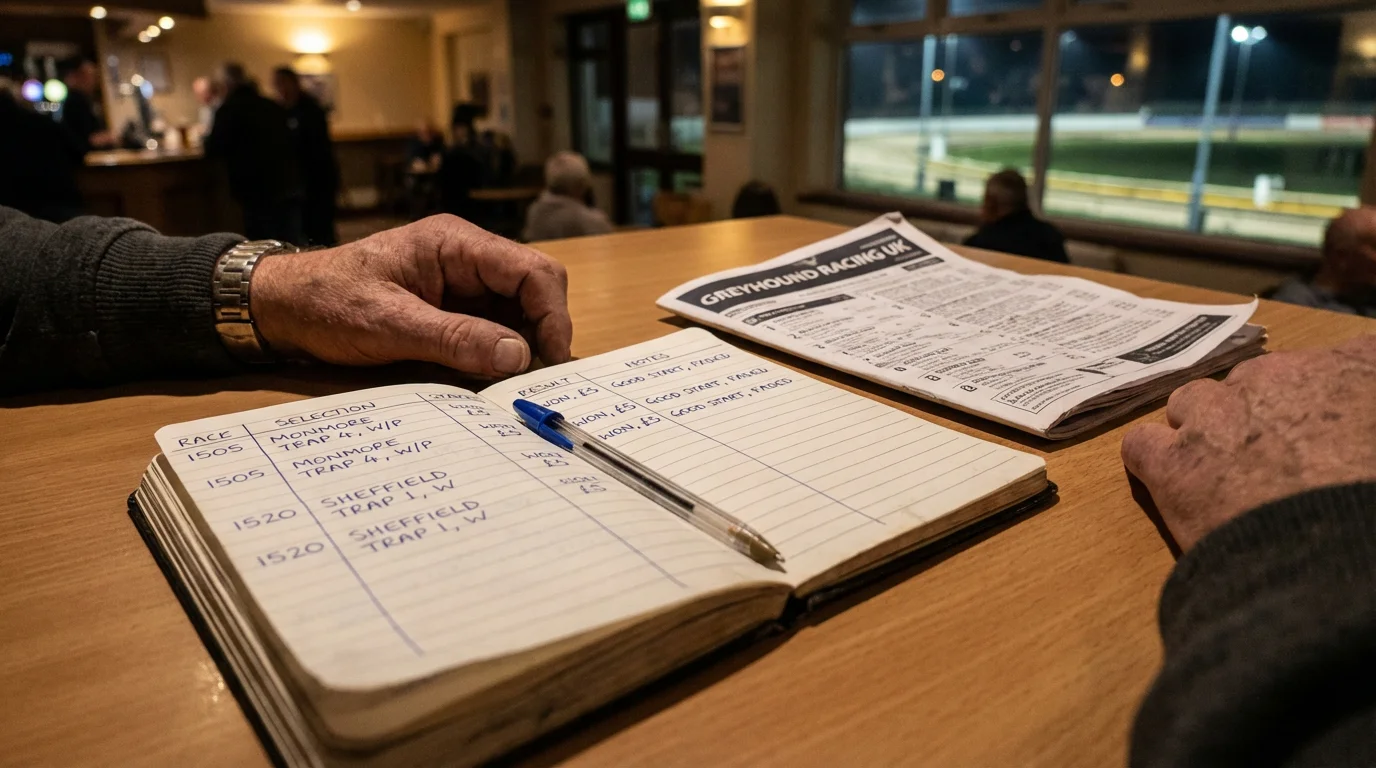
The starting point is your selection method. This can be simple or complex, but it must be consistent. Some punters use a points-based system, scoring each dog on recent form, grade, trap draw, early pace, and trainer record. Others rely on a checklist — a dog must tick three out of five criteria to qualify. The specific method matters less than the discipline of applying it the same way to every race. When you deviate — chasing a tip, backing a hunch, inflating stakes on a dog that "can't lose" — you are no longer following a strategy. You are gambling.
Warning: No betting system guarantees profit. Any method, no matter how well-constructed, will produce losing runs. The purpose of a strategy is to give you a positive expected value over a large sample of bets — not to win every race or every session. If someone promises you a system that cannot lose, they are selling you something other than truth.
Staking Plans: Flat, Percentage, or Target Profit
How much you bet on each selection matters as much as which selections you make. The three most common staking approaches for greyhound punters are flat stakes, percentage of bank, and target profit (a simplified form of the Kelly Criterion).
Flat staking is the simplest: you bet the same amount on every selection regardless of the odds. If your unit is five pounds, every bet is five pounds. The advantage is simplicity and emotional control — there is no temptation to increase stakes on "certainties" or reduce them after a loss. The disadvantage is that it does not adjust for confidence or odds value. Flat staking is the recommended starting point for anyone building a new strategy, because it removes one variable while you test your selection process.
Percentage-of-bank staking ties your bet size to your current bankroll. If your bank is five hundred pounds and you bet 2% per selection, your unit is ten pounds. After a losing streak that reduces your bank to four hundred, your unit drops automatically, reducing exposure during drawdowns. After winning, units rise, compounding gains. This is mathematically sounder than flat stakes over the long term but requires more discipline to recalculate.
Interactive Tool
Percentage Staking Drawdown, and Sectional Speed Converter
Calculate the exact unit size after a bankroll drawdown, and convert the guide's own sectional speeds from metres per second into km/h and mph.
New Unit Stake
-
-
Original Unit
-
New Bank
-
Reduction Per Bet
-
What this guide describes without the number: "If your bank is five hundred pounds and you bet 2% per selection, your unit is ten pounds. After a losing streak that reduces your bank to four hundred, your unit drops automatically." The new unit is never stated — it's £8, a £2 reduction per bet.
Dog A Speed
-
-
Dog A (mph)
-
Dog B (km/h)
-
Dog B (mph)
-
What this guide leaves in metres per second: the worked sectional example gives "22.08 metres per second" and "20.48 metres per second" but never converts either to km/h or mph. Converted, Dog A's first-bend split is 79.5 km/h (49.4 mph) — faster than the "over 40 mph" the guide cites elsewhere as typical full-race speed, since early acceleration bursts exceed sustained pace.
Target-profit and Kelly-style staking optimise bet size based on perceived edge and odds. These methods produce faster growth when calibrated correctly, but they require accurate estimation of your true edge — something most punters overestimate. For greyhound betting, starting with flat stakes and graduating to percentage staking is the sensible progression.
Why Specialising in One Track Pays Off
Generalists bet everywhere and win nowhere. That sounds harsh, but the evidence supports it. Greyhound racing across the UK runs at around twenty licensed tracks, each with its own distances, track geometry, trap biases, grading practices, and pool of trainers. A punter who tries to follow racing at all of them is spreading their attention across a dataset too large to master.
Specialising in one track — or at most two — allows you to build a depth of knowledge that is impossible when you spread your attention across the entire fixture list. You learn which trainers are running their dogs into form. You recognise when times are quick for the grade, not just quick in absolute terms. You notice when the track has been running fast after maintenance or slow after wet weather. These details create edge, and they are invisible to the punter flicking between four tracks on a Tuesday evening. Track specialisation also makes your record-keeping more meaningful — over two or three months at a single venue, you accumulate enough data to identify genuine patterns in your own selections.
UK Greyhound Tracks: A Quick Overview
Twenty-odd tracks, each with its own quirks — and its own edges waiting to be found. The UK greyhound circuit in 2026 spans a range of venues from compact city tracks to purpose-built stadiums, each producing a different racing experience and a different set of challenges for punters. What follows is a snapshot of the main venues, not an exhaustive guide — the point is to illustrate how much variation exists and why picking a track to specialise in is worth the commitment.
Romford is one of the busiest tracks in the country, running multiple meetings a week. Its 400-metre sprint distance and short run to the first bend make trap draw and early pace especially influential. Romford races are widely televised and heavily bet, so the market is generally efficient — but efficiency can crack in lower-graded races where betting volume is thinner.
Monmore Green in Wolverhampton runs several nights a week with a reputation for competitive middle-distance racing. The layout suits early-pace dogs, and the Midlands training base forms a distinct ecosystem worth learning. Hove, on the south coast near Brighton, is one of the most prestigious tracks in the country, hosting major competitions and offering distances from sprint to marathon. Coastal weather creates going variations that reward punters who track surface speed across meetings.
Sheffield, Nottingham, Sunderland, Doncaster, Crayford, and Towcester round out the major venues. Towcester is notable for its circuit that includes a hill section — genuinely unique in UK greyhound racing — making stamina unusually important and skewing form from flat tracks.
The variation between tracks is the reason specialisation works. A dog's form at Romford over 400 metres tells you something different from its form at Towcester over 480, even if the raw finishing time looks comparable. The punter who knows their chosen track inside out — the biases, the trainers, the going patterns — has a structural advantage over the generalist who treats every venue the same.
Major Greyhound Races Every Punter Should Know
The Derby is greyhound racing's Grand National — and it's priced accordingly. The English Greyhound Derby, held at Towcester in recent years, is the sport's marquee event. It runs over 500 metres through a series of rounds — heats, quarter-finals, semi-finals, and the final — across several weeks in the summer. Ante-post markets for the Derby open months in advance, and the early prices can carry significant value for punters willing to take a position before the heats shape the narrative. The 2026 edition will again attract the best dogs from kennels across the UK and Ireland, and following the competition from the early rounds gives a punter more insight than jumping in at the semi-final stage.

The Greyhound St Leger, traditionally the second-most prestigious event on the calendar, is contested over a staying distance — typically 710 metres or further — which immediately changes the profile of the likely winners. Stamina, racing craft, and the ability to handle extra bends all come into play, and the St Leger often produces different types of champions from the Derby. For punters, the Leger is interesting because staying races attract less casual betting, which can leave the market slightly less efficient than the heavily-bet Derby.
Other feature events that merit attention include the TV Trophy, the Golden Jacket, the Arc, and various track-specific championships that punctuate the racing calendar. These events often carry enhanced prize money and attract open-class fields where the quality is high and the form is more reliable than in lower-graded races. For punters who prefer to bet selectively rather than grind through every Tuesday night card, the major race calendar offers a natural rhythm: study the heats, build your shortlist, and commit your stakes in the later rounds when you have the most information.
Ante-post betting on feature races is a distinct skill. You are betting weeks or months before the event, which means your selection might not run due to injury or loss of form. Non-runner, no-bet rules vary between bookmakers, and understanding the terms is essential. The reward for accepting this risk is significantly better odds than you will find on the day, when the market has hardened and the value has been squeezed out. The major races also serve as a useful calibration tool — watching how pace, draw, and stamina interact at the top level informs your approach to the graded races where you do most of your everyday betting.
Betting Responsibly on the Dogs
The fastest way to ruin greyhound betting is to forget it's gambling. Everything in this guide — form analysis, trap dynamics, staking plans — is designed to improve your decision-making and tilt the odds closer to your favour. None of it eliminates the fundamental reality that you can lose, and that losing runs are a normal part of the process. Responsible betting is not a footnote to a strategy guide. It is the foundation without which no strategy matters.
Important: Set deposit limits before your first bet. Every major UK bookmaker offers deposit-limit tools that let you cap how much you can put into your account over a day, week, or month. Set these limits at the start, when you are thinking clearly, and resist the urge to raise them during a losing streak.
UK bookmakers licensed by the Gambling Commission are required to offer a suite of responsible gambling tools including deposit limits, loss limits, session time reminders, cooling-off periods, and self-exclusion. If you find that you are betting more than you can afford, betting to chase losses, or feeling anxious about your gambling, these tools exist to help — and they work best when you use them before the problem escalates rather than after.
GambleAware (www.begambleaware.org) provides free advice and support for anyone concerned about their own or someone else's gambling. The National Gambling Helpline is available around the clock. Self-exclusion schemes like GAMSTOP allow you to block yourself from all UK-licensed online gambling sites for a period of your choosing. None of these measures are signs of failure — they are rational tools for managing risk, and the smartest punters treat them with the same seriousness as they treat their staking plan.
Frequently Asked Questions
How do you pick a winner at greyhound racing?
Start with the race card and work through the key factors in order: recent form, finishing times relative to the grade, trap draw, and running style. Identify which dog has the early pace to lead at the first bend, because the leader wins the majority of greyhound races. Check for grade changes — a dog dropping in class is often undervalued by the market. Cross-reference the trap draw with each dog's running style to predict who gets a clear run and who faces trouble at the first bend. Finally, compare your assessment with the odds to decide whether the price represents value.
What is the best trap in greyhound racing?
Statistically, Trap 1 wins more races than any other position across UK tracks, typically accounting for around 19-20% of wins against the 16.7% you would expect from a perfectly even distribution. The inside rail gives the Trap 1 dog the shortest route to the first bend. However, trap advantage varies significantly between tracks — a venue with a long run to the first bend reduces the inside edge, while a short run-up amplifies it. The best trap for any individual race depends on the track layout and the running styles of the dogs drawn around it.
Do favourites win at greyhound racing?
Yes, but not often enough to make blind backing profitable. The market favourite wins roughly a third of all UK greyhound races, which means it loses about twice as often as it wins. Because the favourite's odds are short by definition, the payouts from wins do not compensate for the accumulated losses. Profitable punters distinguish between favourites that deserve their price — dogs with strong form in the right grade and draw — and those that are over-bet on reputation alone.
The Dog That Leads at the First Bend
Greyhound racing doesn't reward the person with the best system — it rewards the person who pays the closest attention. That distinction matters, because the betting industry is full of people selling shortcuts and secrets, and the punters who buy them are usually the same ones who stop recording their bets after a losing week. The truth about consistent winners in greyhound betting is less exciting and more effective: they do the work, they apply it methodically, and they accept that the edge they build is measured in percentage points, not certainties.
Everything in this guide — form reading, trap dynamics, running styles, grading, bet types, odds, strategy, track knowledge — feeds into a single skill: making assessments that are better than the market's assessment. You do not need to be right every time. You do not even need to be right most of the time. You need to be right often enough, at odds long enough, that the maths works in your favour over hundreds of bets. That is what value means in practice, and it is the only thing that separates punters who grow a bankroll from punters who deplete one.
The dogs themselves are remarkable athletes — a greyhound at full stride covers ground at over 40 miles per hour, and the difference between first and last in a graded race is often less than two lengths. The margins are tiny, the action is fast, and the races keep coming, often every fifteen minutes at a busy meeting. That speed and frequency make greyhound racing both exciting to watch and dangerous to bet on without discipline.
If there is one piece of advice worth more than any form analysis, it is this: be selective. The best greyhound punters bet on a fraction of the races they study. They assess the form, evaluate the traps, check the odds, and if nothing qualifies under their criteria, they sit it out. The punter who bets four races a night and wins two is in far better shape than the punter who bets twelve and wins five.
Greyhound racing in Britain is a working sport with a long history and a committed community of trainers, owners, and punters who keep the tracks running. Approach it with respect — for the animals, for the people involved, and for your own bankroll — and it gives back more than most forms of betting can offer: a fast, data-rich, genuinely skill-based pursuit where the person willing to put in the work can find real value. The form is there. The traps are drawn. The rest is on you.
