
St Leger and Major UK Greyhound Races
Best Greyhound Betting Sites – Bet on Greyhounds in 2026
 Available in US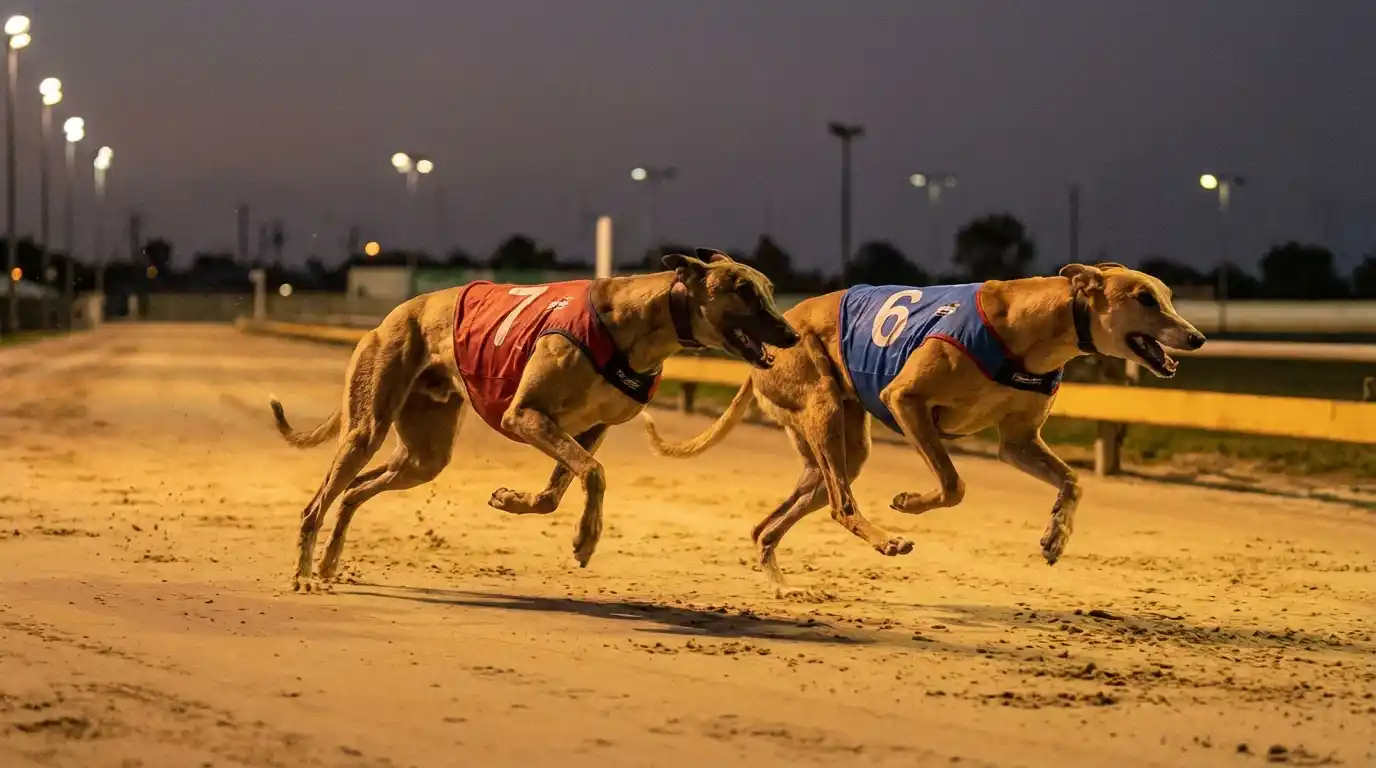
Major UK Greyhound Races: St Leger and TV Trophy
The Derby gets the headlines — but the UK calendar has depth that most casual punters never explore. Beyond the flagship event at Towcester, the British greyhound season is punctuated by a series of prestigious competitions that offer distinct betting challenges, different distance profiles, and markets that attract less public attention than the Derby — which, for the informed bettor, means more room for value.
Each major event has its own character. The St Leger tests staying power. The TV Trophy showcases speed at the standard distance. The Puppy Derby introduces the next generation. Understanding these events, their formats, and their place in the calendar transforms your greyhound betting from a series of isolated race-night punts into a season-long pursuit with natural peaks of opportunity.
The Greyhound St Leger
The stayer’s classic — the St Leger tests stamina as much as speed. If the Derby is the sprinter’s crown, the St Leger is the stayer’s equivalent, and the dogs that contest it are a different breed in every sense that matters for form analysis.
The St Leger has been a fixture of the greyhound calendar since 1928, making it nearly as old as the Derby itself. Originally held at Wembley Stadium from 1928 until 1998, the race moved to Wimbledon before transferring to Perry Barr in 2017 and then to Nottingham in 2025, where it is run over 730 metres — a distance that demands genuine staying ability, with additional bends that test a dog’s capacity to sustain race speed under pressure. The St Leger is not a race for dogs that fade after the third bend, and the form book for this event needs to be read through a different lens from standard-distance competitions.
The multi-round format mirrors the Derby structure: heats, semi-finals, and a final, with the competition unfolding over several weeks. Each round produces staying form that is valuable and relatively scarce — most dogs race predominantly at standard distance during the regular season, so the St Leger heats provide a rare opportunity to assess staying credentials under competitive conditions.
Betting on the St Leger rewards punters who understand what makes a stayer. Look for dogs with strong closing sectionals over the standard trip — dogs that finish faster than they start, indicating they have energy in reserve at the end of 480 metres. Physical build matters: leaner, rangier dogs tend to handle the extra distance better than heavily muscled sprinters. Pedigree can also offer clues, though greyhound breeding records are less publicly accessible than those in horse racing.
The ante post market for the St Leger is typically thinner than the Derby, with fewer bookmakers offering early prices and less public money flowing into the market. For punters with staying-form expertise, this thinner market is an advantage — pricing errors persist longer, and the value, when you find it, tends to be more substantial.
TV Trophy, Golden Jacket, and Other Features
Each race has its own character — and its own betting profile. The UK greyhound calendar features a rotating cast of feature events that sit below the Derby and St Leger in prestige but above standard graded racing in quality and betting interest.
The TV Trophy, historically held at various venues and typically run over the standard distance of around 480 metres, is one of the most valuable open races in the calendar. It attracts top-class dogs from across the country and is often broadcast on terrestrial or satellite television, which drives higher betting volumes and deeper markets. The TV Trophy is a form student’s race — the quality of the field means that careful analysis of each dog’s recent form, draw, and running style can genuinely separate contenders from the field.
The Golden Jacket at Crayford is a staying event over approximately 714 metres, providing an alternative to the St Leger for punters interested in longer-distance racing. Crayford is a tight track with sharp bends, which changes the staying dynamic — raw stamina is not enough, and dogs need to handle the turns efficiently to stay competitive. This track-specific requirement can catch out dogs whose staying form was built at more galloping circuits.
The Cesarewitch, named after its horse racing counterpart, is another staying feature that appears on the calendar at various venues. Like the Golden Jacket, it caters to the marathon end of the sport and attracts specialist stayers who may not contest the St Leger.
The Puppy Derby features younger dogs — typically under two years old — competing over the standard distance. Puppy races are among the most volatile in greyhound racing because the dogs are still developing physically and their form is limited. Upsets are common, prices are generous, and the ante post market is particularly speculative. The Puppy Derby is fertile ground for punters who follow juvenile form closely and can identify talent before the wider market recognises it.
Regional features like the Scottish Greyhound Derby at Shawfield, the Essex Vase, and various track-specific championships round out the major-race calendar. These events attract less national media attention but still draw quality fields and offer ante post markets worth monitoring.
Annual Racing Calendar for Punters
Knowing the calendar means being ready when the ante post markets open — and the best prices are almost always available in the earliest days of market formation.
The UK greyhound major-race calendar broadly follows a seasonal pattern. The early months of the year are quieter, with graded racing and lower-profile features dominating the schedule. Spring sees the preparation phase for the Derby, with trials, qualifying heats, and early ante post markets appearing from around April. The Derby heats typically begin in May or June, with the final held in the summer — traditionally one of the sporting highlights of the British summer calendar.
The St Leger sits later in the year, usually in the autumn, providing a second peak of major-race activity after the Derby. The gap between the Derby and the St Leger is filled by a series of mid-tier features: the TV Trophy, various open races, and regional championships that keep the calendar active through the summer and into autumn.
The Puppy Derby runs alongside the senior calendar, typically in the early summer. The Golden Jacket and Cesarewitch tend to fall in the autumn and winter months, catering to the staying-race calendar that builds towards the St Leger period.
For ante post purposes, the critical dates to track are: when the Derby entries are confirmed (triggering the ante post market), when the St Leger entries are announced, and when the heats for each major event are drawn. These moments create the first waves of market-forming information and are the windows where early-price value is most likely to be found. Set calendar reminders for the weeks leading up to each major event and check the ante post markets as soon as they open. The first day of an ante post market is often the day the widest prices are available.
A Sport with More Depth Than Most Punters Explore
Beyond the Derby lies a full season of quality racing — and value. The punters who restrict their major-race interest to the Derby alone are missing months of opportunity across events that draw smaller crowds, attract less media attention, and produce thinner markets where pricing errors are more common and more persistent.
The St Leger rewards staying-form specialists. The TV Trophy rewards form students who can read a quality field. The Puppy Derby rewards those willing to follow juvenile talent before it reaches the mainstream. Each event has its own niche, its own form dynamics, and its own market characteristics — and each one rewards preparation.
Building a full-season approach to major-race betting transforms greyhound wagering from a weekly habit into a structured pursuit with defined peaks and valleys. You prepare for the Derby in spring, execute through the heats and final in summer, shift attention to the staying races in autumn, and use the winter months to track young dogs and prepare for the next cycle. That rhythm keeps your analysis fresh, your bankroll engaged, and your attention focused on the events where the biggest edges are available.
The Derby will always be the headline act. But the sport’s supporting cast — the St Leger, the TV Trophy, the Golden Jacket, the Puppy Derby, and the dozens of regional features that fill the calendar — is where the committed punter builds a year-round edge.
