How to Use Greyhound Racing Replays for Betting
Best Greyhound Betting Sites – Bet on Greyhounds in 2026
Loading...
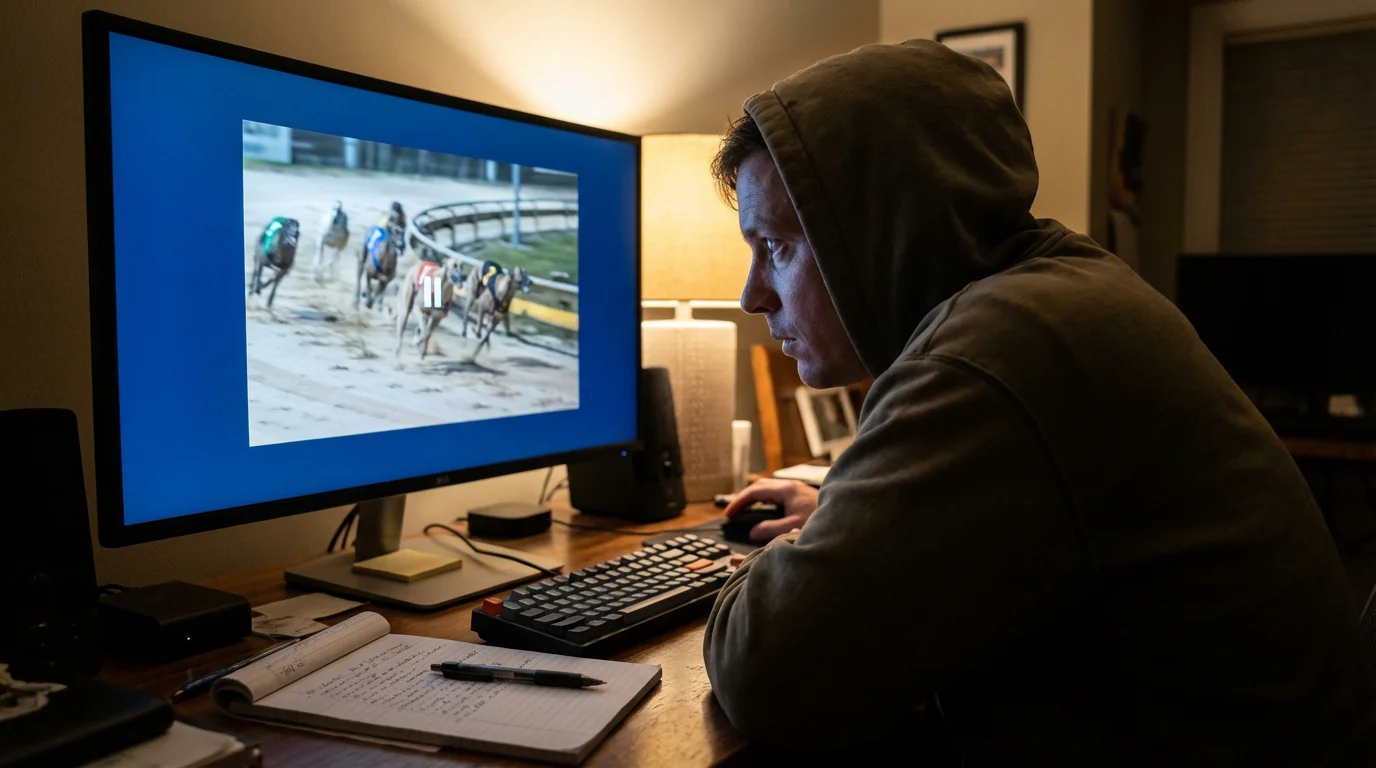
The Replay Tells the Story the Form Card Can’t
Form figures say what happened. Replays show you why. That distinction is the reason experienced greyhound punters treat replays as an essential part of their analysis rather than a casual afterthought. The racecard tells you that a dog finished fourth, beaten three lengths. It does not tell you that the dog was cannoned into at the first bend, lost five lengths recovering, and closed faster than anything else in the field. Only the replay reveals that story — and it is a story that changes your entire assessment of the dog’s next run.
Replay analysis is the closest thing greyhound betting has to watching game film in team sports. Coaches study footage to understand how plays developed, where positioning went wrong, and what adjustments to make. Greyhound punters study replays for the same reasons: to understand the context behind a result that the bare numbers cannot capture. A dog’s finishing position is a fact. The sequence of events that produced it — the trap break, the first-bend battle, the crowding, the clear run or the lack of one — is the narrative that makes that fact meaningful.
Most punters skip this step. They rely on form figures, times, and perhaps the brief race comments that appear on the card. That reliance on summary data is understandable — it is faster and easier than watching footage — but it creates a systematic blind spot. Punters who watch replays see things that punters who only read form miss, and over hundreds of bets, that visibility translates into better selections.
Where to Find Greyhound Race Replays
Most bookmakers and Racing Post offer free replays, and accessing them takes less effort than many punters assume.
The primary source for UK greyhound race replays is the RPGTV (Racing Post Greyhound TV) archive, which covers meetings from GBGB-licensed tracks. Replays are typically available within a few hours of the race and remain accessible for an extended period. The Racing Post GreyhoundBet website and app provide replay links integrated into their racecard and results pages, making it straightforward to click through from a dog’s form line to the actual footage of that run.
Major bookmakers also host greyhound replays as part of their live streaming platforms. If you have a funded account with bookmakers like bet365, Coral, or William Hill, you can typically access replays of recent greyhound meetings through the same interface used for live streaming. The navigation varies by platform, but the footage is generally the same — sourced from the official track feeds.
Some independent greyhound data sites and YouTube channels maintain replay archives, though the coverage and quality can be inconsistent. For systematic replay analysis, stick with the official sources where the footage is complete, correctly labelled, and available for all races on the card rather than selected highlights.
A practical note on workflow: when studying a racecard for an upcoming meeting, identify the dogs you want to watch and pull up their last two or three runs. You do not need to watch every race from every meeting — that would consume hours. Focus on the runners that are central to your betting decisions: the dogs you are considering backing, the favourites you might want to oppose, and any runners whose recent form figures are ambiguous or surprising. A targeted approach to replay watching takes 15 to 20 minutes per meeting and yields significantly more insight than that time spent staring at form figures alone.
What to Look for in a Race Replay
Watch the first bend twice, then watch it again. The first bend is where greyhound races are won and lost, and it is where replay analysis delivers its greatest value.
On your first viewing, watch the race in full at normal speed to get the overall picture. Note who led, who chased, and who came from behind. Then rewatch, and this time focus specifically on the following elements.
The trap break. How quickly did each dog exit its trap? Was the break clean, or did the dog dwell — hesitating for a fraction of a second that costs two or three lengths? Some dogs are consistently fast from the traps; others are inconsistent. If a dog you fancy has a poor break in its recent replay but its overall trap-break record is strong, the slow start may have been a one-off. If the slow starts are a pattern across multiple replays, it is a trait you need to factor into your assessment.
First-bend positioning. This is the critical moment. Watch where each dog is as the field enters the first bend. Who has the rail? Who is forced wide? Who is boxed in behind other dogs with no room to manoeuvre? The race comments on the card will mention obvious incidents (“bumped first bend,” “crowded on the turn”), but replays reveal subtleties that comments miss — a dog losing half a length by having to check its stride, or a dog gaining an advantage by cutting inside a tiring rival.
Crowding and interference. Greyhound racing is a contact sport at the first bend. Watch for dogs that are bumped sideways, lose their stride, or are forced to change their racing line. A dog that suffered interference and still finished within two lengths of the winner ran a significantly better race than its finishing position suggests. If the racecard shows a fifth-place finish but the replay shows a dog that lost four lengths to a first-bend bump and closed strongly, you are looking at a potential next-time improver.
Running line. Track whether the dog races on the rail, in the middle of the pack, or wide. A dog that ran wide throughout — covering extra ground on every bend — has effectively run a longer race than the others. Its finishing time will be slower, but the effort was greater. If it switches to an inside draw next time and can hold a tighter line, the improvement could be significant.
Closing effort. The final straight is where you assess a dog’s finishing ability. Watch whether it is accelerating, maintaining pace, or decelerating in the last 50 metres. A dog that visibly picks up speed through the line has energy in reserve. A dog that is shortening its stride and losing ground is at its physical limit. This visual assessment of closing effort is more informative than the finishing time alone, because it tells you whether the dog was fully extended or had more to give.
Trouble in running. Look for incidents that the race comments did not capture, or captured only briefly. A dog that clipped heels in the back straight and lost momentum. A dog that was blocked on the final bend and had to switch around the outside. These moments cost lengths and positions but are invisible in the form figures. When the same dog gets a clean run in its next race, the improvement can be dramatic — and the market often underestimates it because the casual punter sees only the previous poor finishing position.
Turning Replay Insights Into Better Selections
A dog that was bumped at the first bend and still finished third is a better prospect than the form figure shows. That single insight, applied consistently through replay analysis, will improve the quality of your selections more than almost any other analytical habit.
The practical application is to adjust your form assessment for each dog based on what the replay reveals. If a dog finished fifth but the replay shows it was badly impeded, upgrade your assessment. The fifth-place finish is not a true reflection of the dog’s ability in that race, and its next run — from a better draw, or in a field with less early-pace competition — may produce a dramatically better result. If the market prices the dog based on the fifth-place finish, you have a value opportunity.
Equally, downgrade dogs whose results flattered them. A dog that won by two lengths in its last race sounds impressive. But if the replay shows it had an uncontested lead, the rest of the field was hampered at the first bend, and it was actually shortening its stride in the final 50 metres, the win was circumstantial rather than authoritative. That dog may struggle when it faces a genuine challenge for the lead next time, and the market may overestimate it based on the winning form.
Keep a notebook — physical or digital — where you record replay observations for each dog you plan to follow. Note the date, the race, the trap, the key events you observed, and your adjusted assessment. Over weeks and months, this notebook becomes a form guide that no bookmaker or tipster can replicate, because it is built on your own visual analysis of the races. That personalised edge is what makes replay analysis one of the most powerful tools available to the individual greyhound punter.
See It to Believe It
Replays do not lie — they just require patience to understand. A form figure is an abstraction. A race replay is the reality that produced it. Every number on the racecard was generated by a dog running a real race with real interference, real positioning battles, and real moments of fortune or misfortune. The replay restores that reality, and in doing so, it gives you information that the numbers alone cannot provide.
The investment required is modest. Fifteen to twenty minutes of targeted replay watching before a meeting gives you a qualitative edge over the majority of the betting public, who are working from the same form figures and race comments that everyone else sees. The replays are free, readily available, and waiting to be watched. The only cost is your time, and the return on that investment — measured in better selections, more accurate assessments, and a deeper understanding of how races unfold — is consistently positive.
Make replays a non-negotiable part of your pre-race routine. Not every race, not every dog — but every dog you are thinking of backing. If you cannot be bothered to watch two minutes of footage before risking your money, you are betting on incomplete information. And in a six-dog race where margins are thin and luck plays a significant role, incomplete information is exactly the kind of handicap you cannot afford.