In-Play Tactics and Live Greyhound Betting
Best Greyhound Betting Sites – Bet on Greyhounds in 2026
 Available in US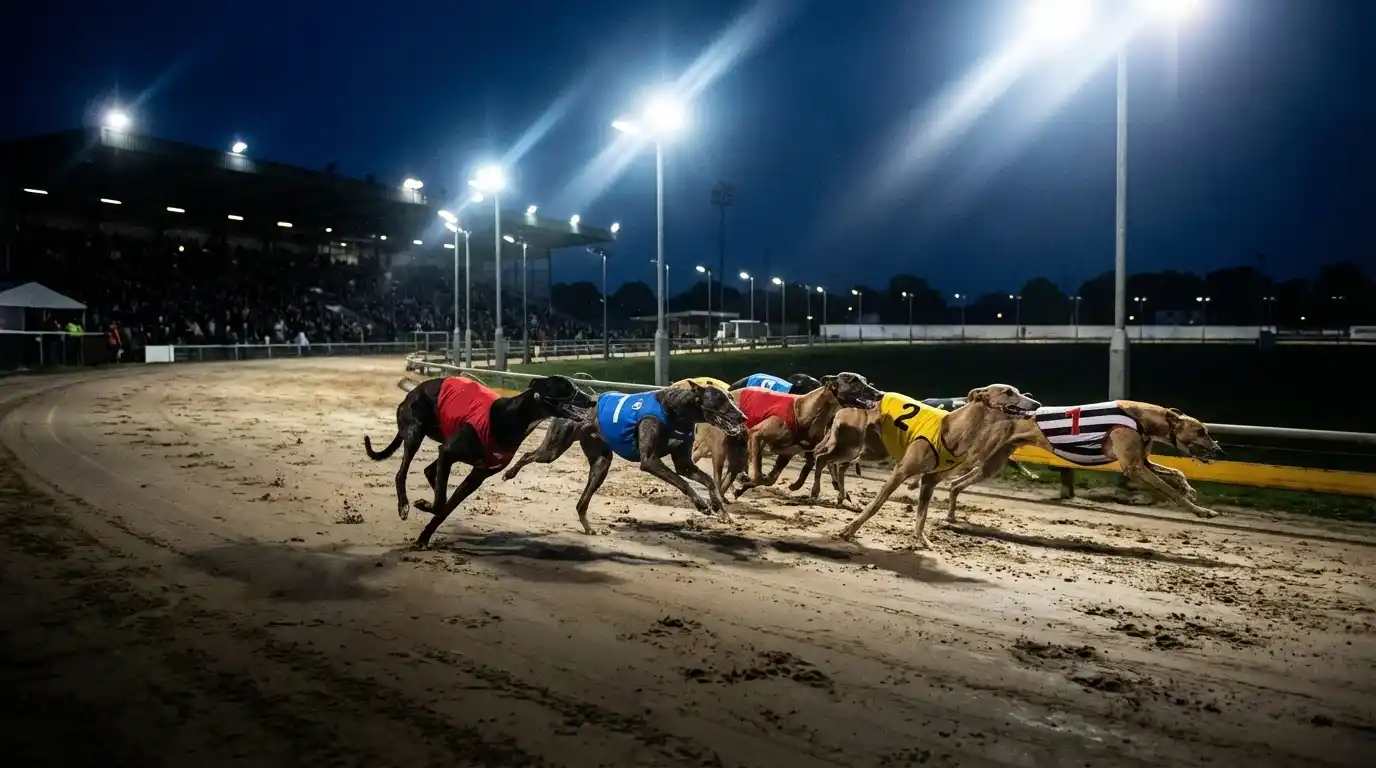
In-Play Tactics for Live Greyhound Betting
Greyhound races last 30 seconds — live betting on them lasts even less. That compression of time is the defining feature of in-play greyhound wagering and the reason it demands a fundamentally different approach from pre-race betting. There is no time to analyse, no time to reconsider, and very little time between the moment an opportunity appears and the moment it vanishes.
In-play betting, also called live betting, allows you to place bets after the race has started. In horse racing, where races unfold over one to four minutes, there is enough time to assess the pace, watch the field position, and make a considered bet mid-race. Greyhound racing does not offer that luxury. A typical 480-metre race is over in under 30 seconds. The time between the traps opening and the first bend — the phase that largely determines the race outcome — is roughly four seconds. By the time you have processed what you see, the market has already moved, and the race may be nearly over.
This is not a medium for thoughtful analysis. It is a reactive environment where decisions must be pre-planned and executed instinctively. Punters who treat live greyhound betting as an extension of their pre-race process — slow, considered, evidence-based — will find that the race finishes before their bet is matched. Those who succeed in this space do so by preparing their in-play strategy before the lids open, not after.
To sharpen your in-play reaction times, we highly advise studying greyhound racing replays to spot trouble in running that the bookmakers might have missed.
Where In-Play Greyhound Betting Is Available
Not all bookmakers offer live markets on dogs, and the quality of those that do varies considerably.
Betting exchanges are the primary venue for in-play greyhound betting. Betfair and Smarkets both allow in-play trading on greyhound races, with markets remaining open (in theory) until the result is declared. The exchange model suits in-play betting because odds adjust in real time based on supply and demand — as the race unfolds, prices shift to reflect what punters watching the action believe will happen. A dog that leads at the first bend will see its price shorten sharply; a dog that misses the break will drift.
Among traditional bookmakers, in-play greyhound betting is less widespread. Some of the larger UK operators offer cash-out functionality on pre-race greyhound bets, which is a form of in-play engagement — you can lock in a profit or cut a loss based on how the race is progressing. Full in-play betting with new stakes, however, is more commonly associated with the exchanges.
Live streaming is a prerequisite for meaningful in-play betting, and most major bookmakers with greyhound coverage offer streams from UK tracks. The quality and latency of these streams matter. A stream that runs two or three seconds behind real time — common on mobile and some desktop feeds — puts you at a significant disadvantage against punters with faster connections or those betting at the track itself. That latency gap is one of the structural disadvantages of in-play greyhound betting from home.
If you are considering in-play greyhound betting, verify that your chosen platform supports it on the specific meetings you follow. Not all tracks are covered for in-play markets, and liquidity (particularly on exchanges) varies dramatically between popular meetings and lower-profile cards.
Realistic In-Play Approaches
You will not react fast enough to mid-race developments — so pre-plan your moves before the traps open.
The only viable in-play strategies in greyhound racing are those built on pre-race preparation. You cannot watch a greyhound race unfold and make real-time analytical decisions within its 30-second duration. What you can do is establish conditional plans before the race: “If Dog A leads at the first bend, I will lay Dog B” or “If the pace is fast and the leaders are wide, I will back Dog C to close.”
The most common in-play approach is trading for profit on pre-race positions. You back a dog before the race at a certain price, then lay it in-play at shorter odds once it holds a favourable position early in the race. The difference between your back price and your lay price, adjusted for stakes, is your guaranteed profit regardless of the final result. This is a technique borrowed from horse racing trading and it works in greyhound racing — but only if the market has enough liquidity for your in-play lay to be matched quickly, and only if the dog you backed achieves the early position you anticipated.
Another approach is cash-out timing with traditional bookmakers. If you have a pre-race bet and the race is going well — your dog is leading at the first bend, or is in a strong position — the bookmaker’s cash-out offer will be higher than zero (and potentially higher than your stake). Deciding when to cash out and when to let the bet run is a form of in-play decision-making that does not require placing a new bet. The discipline is to set your cash-out threshold before the race: “I will cash out if offered 80% of the potential winnings with two bends to go,” for instance.
A third approach is to focus on the moments just before the off — the final seconds before the traps open, when the dogs are being loaded and the market makes its last moves. This is not strictly in-play, but it captures the last available information (dog behaviour in the traps, late scratchings, market confidence shifts) and can be executed within the pre-race window. Many experienced greyhound bettors consider this the most valuable betting window of the entire race cycle.
The Risks of Greyhound Live Betting
Speed is the enemy of decision-making, and greyhound in-play betting is the fastest betting environment in mainstream sport.
The most significant risk is impulsive betting. The adrenaline of watching a race live, combined with the availability of a betting button, creates a powerful temptation to act without thinking. A dog breaks well and you rush to back it in-play — but the price has already shortened to the point where there is no value. A dog starts slowly and you lay it instinctively — but it closes strongly and wins on the line. These are not bad reads; they are reactions that arrived too late to be profitable. The market processes information faster than your fingers can type a stake.
Latency is a structural disadvantage for home bettors. If your live stream is two seconds behind the actual race and the exchange or bookmaker’s data feed is faster, you are effectively betting on the past. The prices you see on screen reflect what happened two seconds ago, not what is happening now. Professional in-play bettors use data feeds rather than visual streams, giving them a speed advantage that casual punters cannot replicate. This information asymmetry is built into the market, and it tilts the odds against you every time you bet in-play based on what you see on your screen.
Thin liquidity on exchange greyhound markets means your in-play bets may not be matched at the price you want — or at all. In horse racing, major events generate enough in-play volume for large bets to be matched instantly. In greyhound racing, even popular meetings may have only a few hundred pounds in the in-play market. If you are trying to lay a dog at 2.0 and the available money at that price is only £20, your £50 lay will only be partially matched, leaving you with an unbalanced position.
Finally, the frequency of racing compounds all these risks. Greyhound meetings often feature twelve or more races at fifteen-minute intervals. The rapid turnover creates a constant stream of opportunities to bet, and the temptation to chase losses or to bet on races you have not analysed is stronger than in sports with less frequent action. In-play betting on every race of an evening meeting is a recipe for a depleted bankroll, because the percentage of races you have a genuine in-play edge on is vanishingly small.
Excitement Is Not an Edge
Live betting on greyhounds is entertainment. Treat it as such, and it can be enjoyable without being destructive. Treat it as a serious analytical endeavour, and the speed of the races will outpace the speed of your thinking.
The punters who use in-play greyhound betting profitably are overwhelmingly those who treat it as a trading exercise — pre-planned, position-based, and mechanically executed. They back before the race, lay in-play at a pre-determined trigger, and lock in a profit or limit a loss based on criteria they established before the first race of the evening. They are not reacting to the race; they are executing a plan that the race happens to activate.
If that sounds more like work than fun, it is — and that is why most punters are better served by focusing their energy on pre-race analysis, where the time pressure is removed and the analytical tools are richer. Pre-race betting gives you hours to study form, compare prices, and make considered decisions. In-play betting gives you seconds. The quality of decisions made under those two timescales is not comparable, and your betting results will reflect the difference.
If you enjoy the thrill of live betting, allocate a small entertainment budget for it — separate from your main bankroll — and treat any losses as the cost of a night’s excitement. Just do not confuse the buzz with an edge.
Access our full library of betting tools and strategies at the Greyhound Winner main hub.
